
View entry
Name: KILBURN, Gray Campbell Conning
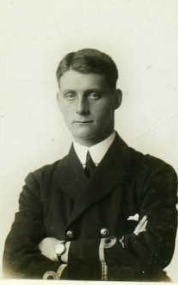
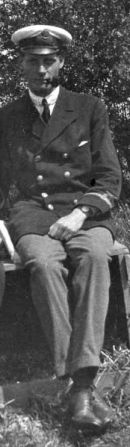
Birth Date: 24 July 1894 Overshand, Norfolk
Death Date: 12 Sep 1983 Sturmister Marshall, Dorset
First Date: 1915
Profession: Farmer
Area: Nyeri
Married: Olivia Bergh Fischer b. 6 Dec 1904, d. 1 July 1988 Burley, Hants.
Children: June Conning (Barker) (16 June 1926 Southampton-6 Mar 1998 Durham); Angela (Doggrell) (1935); Charmian (Horner) (1938)
Book Reference: Red 25, Hut, Red 22
War Service: Royal Navy; RAF
School: Malvern College
General Information:
1939 England and Wales Register living with wife and ?mother in Poole, as 'farmer tobacco and dairy'
Royal Aero Club Aviator's Certificate 13 Dec 1915 (Ancestry)
https://www.greatwarforum.org/topic/163103-british-airship-crash-in-eemnes-holland/page/3/ Gray Campbell Conning Kilburn (no hyphenation by the way; the two middle Christian names are old family names) held pilot's licence No. 90 if memory serves. After internment in Holland he returned briefly to the UK but then emigrated to S. Rhodesia [actually Kenya] where he farmed until the end of the Second World War. On return to England he raised Jersey cattle in Dorset and died in 1986. He once kindly took me through his photo albums; a quiet giant of a gentleman who almost brushed aside his airship days as though they were a mere inconvenience.
https://airwar19141918.wordpress.com/2018/01/09/13-december-1917-bloomin-heek/ The Heek family of Eemnes in the Netherlands were rudely awoken this morning when an unmanned airship crashed into their house. Fortunately for them, it was not one of the Giant Zeppelins based nearby but a British Coastal Class blimp, the C26.
Following the failure of the C27 to return on 11 December 1917, the C26 was sent out to look for the C27. The C26 was under the command of Flight Lieutenant Gray Campbell Conning Kilburn, with Flight Lieutenant Humphrey Evelyn Chichele Plowden, Petty Officer A.C. Townsend, Leading Mechanic F.D. Johncock and Radio Operator F.W. Warman. It turned out that the C26 had drifted off further over the sea towards The Netherlands and came to ground near Poortugaal, Rotterdam. Four of the five crewmen managed to get out of the gondola here. Townsend injured his leg in the process. Kilburn’s report recorded:
“About 11 o’clock the drogue suddenly opened (it had got caught up in some way) and reduced our speed to about 8 knots. We fired Verys lights rifle periodically and also flashed the Aldis lamp. I did not throw the code books overboard as I intended to go up again on reaching the Dutch coast and send another W/T signal. At one o’clock the wind rose a little and the ship started to kite, hitting the sea several times and necessitating the use of the remaining ballast and a bomb. Shortly after, the drogue lifted out of the water and the ship ascended to 3,700 ft. where she was kept in equilibrium for two hours. Directly we rose we tried to send a W/T message. This took some time owing to slight damage to W/T instrument when hitting the sea. The operator heard base asking for information, but he was unable to get anything through. At 2.30 (earlier than we expected) we found that the ship was over land by the cessation of the sound of waves, thus, unfortunately, losing the chance of throwing the codes overboard. I intended landing to rip and burn the codes and the ship and send the pigeons off. Everything was prepared to do so. Again owing to the lack of a top valve we were unable to start descending and had to cut a small hole in the bottom of the envelope. Since the blower was useless, the ship got into a very bad shape and the car turned practically upside down, necessitating everyone sitting on the port rail. The rips and top patch were got ready and the water and the remaining petrol were used as ballast. No lights were seen at the coast or on land and owing to the fog the land was never seen at all. The grapnel caught in something and brought the ship up with a jerk that nearly threw everyone off, but the ship did not touch the ground and before we could rip she broke loose.
We could not see the ground (although we must have been fairly close) even with the aid of the Aldis lamp. At 3.15 am the grapnel caught again. This time I gave the order to jump, thinking we were only 10 feet up, holding on to the rip lines. But we were at least 30 ft. up and in the drop the rips were jerked from our hands. Lieut. Plowden was saved by falling into a canal, but PO Townsend unfortunately dislocated his leg. LM Johncock was shaken but escaped hurt. AM 2 Warman was caught up somehow and was taken off in the ship before we could do anything.”
The crew were taken prisoner and interned for the rest of the war.