View entry
Name: MACKAY, Alexander Murdoch
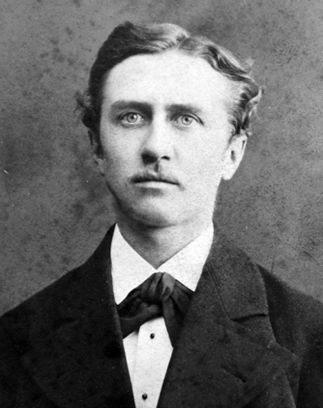
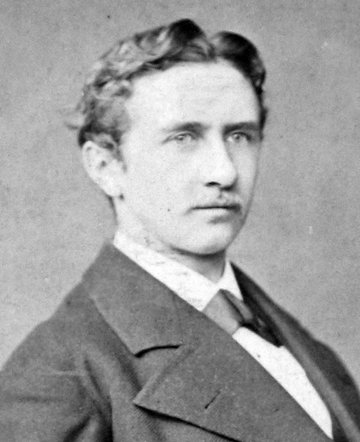
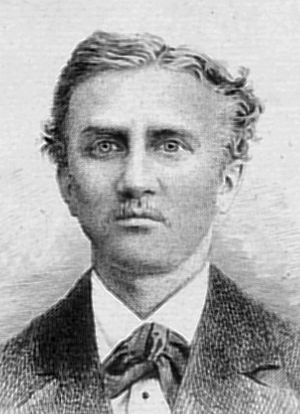
Birth Date: 13.10.1849 Rhynie, Aberdeenshire
Death Date: 8.2.1890 Usambiro at south end of Lake Victoria
First Date: 1876
Last Date: 1890
Profession: An engineer from England with first party of missionaries to Uganda - he developed dysentery and was sent back to the coast in 1876. Reached Uganda in 1879. Began Industrial Mission work - workshops and smithy etc.
Area: Outstanding linguist. 18 years in Uganda. Interred at Namirembe 1927
Book Reference: Gillett, Tucker, North, CMS, EAHB 1904, Barnes
General Information:
CMS 1876 - Age 26. Of Rhynie, Scotland. Engineer at Berlin. 1876 accepted January 25; and April 27 to the Eastern Equatorial Africa - Nyanza - Mission. Detained on and near the coast by illness, and in making a road to Mpwapwa; but ultimately reached Uganda and joined Wilson, Dec 1878. 1879, Wilson invalided and Mackay in 3 years the only member of the original party of 1876 left in Uganda. 1890, Feb 8, died at Usambiro. During the whole period he never left EA, and for the greater part of the time was in the capital itself. Memoir by his sister.
St Paul's Namirembe cemetery - Alexander Murdoch Mackay, 13 Oct 1849 - 8 Feb 1890, Usambiro
See Oxford Dictionary of National Biography entry
H. Gresford Jones, Uganda in Transformation, 1926 : Mackay was born to a missionary's life. With his mother's earliest teaching he imbibed sympathy with the aspirations of the backward races of the world. At the age of 8 he was a printer, quoting to his father the saying of Luther that " printing is the latest and greatest gift by which God enables us to advance the things of the Gospel." As a boy he was a devourer of books, though every spare hour was spent in the smithy or carpenter's shop, handling tools of all kinds. At 15 we see him at the Aberdeen Grammar School. At 18 he is at the Free Church training college for teachers in Edinburgh, studying engineering at the University at the same time. Next, with a letter in his pocket to Dr. Bonar, Court Chaplain in Berlin, we see him landing on 1 November, 1873, at Hamburg, to learn German and to qualify himself fully as an engineer. It was there in Germany that Henry Wright's appeal in 1875 for pioneer missionaries for Uganda caught his eye.The same night that he first read the appeal he offered his services, and on 27 April, 1876, he sailed for Zanzibar.Shel Arensen 'Alexander Mackay' in Old Africa no. 124 Apr-May 2026 Alexander Mackay came to Uganda in1876 as a member of the first team from the Church Missionary Society (CMS). Mackay spent nearly 14 years in Uganda, never once returning to his native Scotland. He translated the Gospel of Matthew into Luganda and, using his engineering skills, built 230 miles of roads. Mackay was raised in Scotland in the Free Church. He attended the Aberdeen Grammar School and the University of Edinburgh before going to Berlin to gain experience in engineering. He read an appeal in 1875 in the Edinburgh Review for missionaries to go to Uganda and applied to the CMS. Letters from Henry Stanley, the explorer, said King Mutesa of Buganda would welcome Christian missionaries. In1876 Mackay joined the first CMS party going to Uganda and he was the only missionary to remain for any length of time. Mutesa feared the encroaching power of Egypt, and his first priority was to get guns from Europe and any engineering skills Mackay could offer. But he had an interest in religion. Arab traders from the East African coast had already introduced Islam, and after partially adopting this faith, Mutesa had executed some two hundred Muslim converts for defying him in the name of Allah. He hoped Christianity might provide a counterweight to Islam. Mackay soon set up a printing press and printed reading sheets and portions of the Bible in Swahili, the coastal language introduced by the Arabs, using existing translations. He also learned Luganda and translated the Gospel of Matthew into that language. But Mackay also spent time repairing guns for Mutesa and other technical tasks including road-building. In 1879 Roman Catholic White Fathers arrived; Mackay’s Calvinistic upbringing led him into controversy with them in public at Mutesa’s court. He also debated with Muslims, who feared that his superior debating and technological skills were edging them out of their position of influence. Many young men in training at court for future high office were attracted to Christianity by Mackay’s passionate dedication. From 1885 to 1887 Mutesa’s successor, Mwanga, turned against the Christians at court for the same reason that Mutesa had earlier turned against the Muslims for questioning his authority in the name of a higher power. The names of 50 Protestant and Catholic martyrs are known, and others perished too. During this dangerous time Mackay was the only western missionary in the country. The White Fathers temporarily retreated south of Lake Victoria. A Muslim coup in 1888 forced both missionaries and converts to flee, and Mackay moved south to Nassa, in what is now Tanzania. Mackay contracted a virulent form of malaria on February 4, 1890, and he died four days later. He was buried near the mission station at Nassa. Then in 1927 his body was reinterred outside Namirembe Cathedral in Kampala.
H. Gresford Jones, Uganda in Transformation, 1926 : Mackay was born to a missionary's life. With his mother's earliest teaching he imbibed sympathy with the aspirations of the backward races of the world. At the age of 8 he was a printer, quoting to his father the saying of Luther that " printing is the latest and greatest gift by which God enables us to advance the things of the Gospel." As a boy he was a devourer of books, though every spare hour was spent in the smithy or carpenter's shop, handling tools of all kinds. At 15 we see him at the Aberdeen Grammar School. At 18 he is at the Free Church training college for teachers in Edinburgh, studying engineering at the University at the same time. Next, with a letter in his pocket to Dr. Bonar, Court Chaplain in Berlin, we see him landing on 1 November, 1873, at Hamburg, to learn German and to qualify himself fully as an engineer. It was there in Germany that Henry Wright's appeal in 1875 for pioneer missionaries for Uganda caught his eye.The same night that he first read the appeal he offered his services, and on 27 April, 1876, he sailed for Zanzibar.Shel Arensen 'Alexander Mackay' in Old Africa no. 124 Apr-May 2026 Alexander Mackay came to Uganda in1876 as a member of the first team from the Church Missionary Society (CMS). Mackay spent nearly 14 years in Uganda, never once returning to his native Scotland. He translated the Gospel of Matthew into Luganda and, using his engineering skills, built 230 miles of roads. Mackay was raised in Scotland in the Free Church. He attended the Aberdeen Grammar School and the University of Edinburgh before going to Berlin to gain experience in engineering. He read an appeal in 1875 in the Edinburgh Review for missionaries to go to Uganda and applied to the CMS. Letters from Henry Stanley, the explorer, said King Mutesa of Buganda would welcome Christian missionaries. In1876 Mackay joined the first CMS party going to Uganda and he was the only missionary to remain for any length of time. Mutesa feared the encroaching power of Egypt, and his first priority was to get guns from Europe and any engineering skills Mackay could offer. But he had an interest in religion. Arab traders from the East African coast had already introduced Islam, and after partially adopting this faith, Mutesa had executed some two hundred Muslim converts for defying him in the name of Allah. He hoped Christianity might provide a counterweight to Islam. Mackay soon set up a printing press and printed reading sheets and portions of the Bible in Swahili, the coastal language introduced by the Arabs, using existing translations. He also learned Luganda and translated the Gospel of Matthew into that language. But Mackay also spent time repairing guns for Mutesa and other technical tasks including road-building. In 1879 Roman Catholic White Fathers arrived; Mackay’s Calvinistic upbringing led him into controversy with them in public at Mutesa’s court. He also debated with Muslims, who feared that his superior debating and technological skills were edging them out of their position of influence. Many young men in training at court for future high office were attracted to Christianity by Mackay’s passionate dedication. From 1885 to 1887 Mutesa’s successor, Mwanga, turned against the Christians at court for the same reason that Mutesa had earlier turned against the Muslims for questioning his authority in the name of a higher power. The names of 50 Protestant and Catholic martyrs are known, and others perished too. During this dangerous time Mackay was the only western missionary in the country. The White Fathers temporarily retreated south of Lake Victoria. A Muslim coup in 1888 forced both missionaries and converts to flee, and Mackay moved south to Nassa, in what is now Tanzania. Mackay contracted a virulent form of malaria on February 4, 1890, and he died four days later. He was buried near the mission station at Nassa. Then in 1927 his body was reinterred outside Namirembe Cathedral in Kampala.