
View entry
Name: VON SZEK, Samuel Teleki (Count)
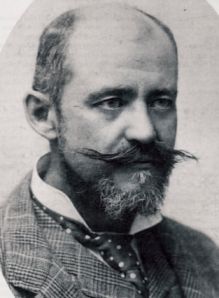
Birth Date: 1.11.1845 Dumbravioara, Hungary
Death Date: 10.3.1916 Budapest
First Date: 1886
Profession: Prospector, explorer and hunter - discovered Lakes Rudolf and Stephanie
Author: East African Diaries
Book Reference: Gillett, North, Chandler, Wikipedia
General Information:
Chandler - good lengthy entry.
Wikipedia Count Teleki and his companion, Lieutenant Ludwig von Höhnel, an Austrian naval officer, left Pangani (Tanzania) in February 1887 with around 400 porters, following the Ruvu river. They were the first to survey a great part of the East African Rift. Teleki was the first to reach the snow-line on Mount Kilimanjaro at 5,300 m, and the first explorer to set foot on Mount Kenya, climbing up to around 4,300 m. He later headed on northwards, following the interior river system, to see on 5 March 1888 the last of the Great Lakes, referred to as the Jade Sea by Count Teleki, who named the lake after his friend, Prince Rudolf. The lake was renamed Turkana in 1975 from the tribe that inhabits its shores. Teleki's and von Höhnel's journey in southern Ethiopia also unveiled a smaller lake, Stefanie (named after Princess Stéphanie of Belgium, the prince's wife), now called Lake Chew Bahir. Though it is commonly stated that he discovered the body of water now referred to as Lake Turkana, the African people living around the lake certainly were aware of it. Even if the meaning of the word "discovery" is taken so as to put that aside, the existence of the lake was known in Europe decades prior to Teleki's expedition. As far back as 1849, Dr. Ludwig Krapf wrote about the Samburu people and his intentions of visiting their lands. A far more direct reference to the lake is found in an 1869 article in the Journal of the Royal Geographical Society. Here, the author, who himself relied on descriptions from African long distance traders, described a large water body. The article included a detailed map and here, the position, general shape and orientation are a perfect match for Lake Turkana.
Frederick Jackson, Early Days in East Africa, 1930 In 1886 I met Teleki at Taveta. He had lost much weight on the march up, something between four and five stone, and had shrunk visibly. He always wore his shirt open to its fullest extent and he thereby exposed a large fold of loose skin across his chest. Amongst other little fads, he always kept his head shaved, and wore a white kofta [hat]. He never wore a coat, even at dinner, only a shirt with sleeves folded well above the elbow, and he always smoked a long- stemmed, long-bowled German pipe. From what I saw him and subsequently heard of him he was always calm and collected. He was certainly a very amusing and outspoken and good company generally. Some of his ideas were quaint, if not actually jarring, others were quite brutal... Later when I saw him on board ship he said 'You know I do not like the black man. I regard him as one big monkey but when I did see my men dying on the road, sometimes 3 or 4 sometimes 6 in the day, then I did begin to pity them. He lost 300 men.
On p. 160 - Buchanan said out of his 250 men only 60 returned. In that district Jackson was to stress that Teleki was a German and his was an English safari.
Sir Geoffrey Archer, Personal & Historical Memoirs of an East African Administrator, 1963 He was an immensely fat man, wearing a skull cap, and though amusing and outspoken, he was quite brutal in his outlook and had a complete disregard for truth. He even went so far as to brand all travellers such as Burton, Speke and Stanley as liars, and to assert that he too would lie freely if he failed to discover a mountain or a lake.