View entry
Name: ZIMMERMAN, Karl Fritz Paul
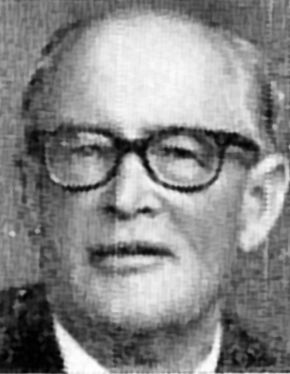
Short Name: 'Bwana Simama'
Nee: orginally Zimmermann
Birth Date: 29 Jan 1888 Germany (Silesia)
Death Date: 12 Apr 1971 Nairobi
First Date: 1913
Profession: Eminent taxidermist, he first went to EA with a game shooting safari, but later opened a Taxidermist business initially on Sclaters Rd. opposite the plot later occupied by the Mayfair Hotel, and latterly at Ruaraka
Area: Nairobi
Married: In Stettin 12 May 1915 Minna Antonie Auguste Carmesin b. 10 Jan 1882
Book Reference: Gillett, EAMR, Who's Who 63, Chandler, Daily Nation
War Service: German army in World War 1
School: Buerger School; Art & Technical School Jena Germany
General Information:
Who's Who 63 - studied as Naturalist and Dermoplastiker Museum of Phylogeny University of Jena; Army Service 1914-19; Phylogeny Museum Jena; Museum of Natural History Wiesbaden, Zoological Museum Hamburg University; Chief Dermoplastiker Umlaff Studios Hamburg; came to Nairobi 1929, built up taxidermy branch for Chas A. Heyer & Co., took over taxidermy branch 1934; Technical Director Zimmerman Ltd since 1961
Chandler - A Silesian native, Zimmerman served in the German army during WW1 and arrived in Kenya in 1929.
Daily Nation 11 Aug 2013 How did a Nairobi estate, Zimmerman, acquire a German name? On April 12, 1971, at the Nairobi Hospital, Karl Fritz Paul Zimmerman finally succumbed to diabetes. For a man who had built the second largest taxidermy factory in the northern plains of Nairobi, his death was also a big blow to the art of making hunting trophies. Zimmerman Ltd was internationally known. Almost all the animals mounted for display in old Kenyan hotels, at State House Nairobi, and in many clubs originated from the factory. Today, Nairobi’s Zimmerman Estate stands on the same grounds that the company made its name before the national ban on hunting in 1977 deprived it of animals. One of its last projects was the mounting of Ahmed, the Marsabit elephant that had been protected by a presidential decree and which still stands at the National Museums of Kenya’s exhibition gallery. Very little is known about Zimmerman. His is the story of Kenya as the destination of big-game hunters and how they made capital out of the country’s wildlife. Of all those who made millions of dollars making trophies, Zimmerman, or Bwana Simama to his workers, was in a class of his own. Kenya had been attracting some of the largest game hunting safaris, some of them sponsored by the Smithsonian Institute. Among the biggest collectors remained former US President, Theodore Roosevelt.
Gazette 2 July 1971 probate
Tee Saigon, Africa, Facebook 7 July 2026 This Silesian native, who served in the German army during WW1, is immortalized in a Nairobi estate. Apart from Out of Africa Danish writer Karen Blixen, whose name is immortalized in the upmarket Karen in Nairobi, Zimmermann has all but been forgotten. Many Kenyans still wonder why a down-market Kenyan estate at the edge of Kiambu has a German name.
Zimmerman had arrived in Kenya in 1929 to help build a taxidermy branch for Chas A. Heyer & Co., whose owner was a German hunter who was involved in the import of Mauser sporting rifles to British East Africa. Most of these were branded Chas A. Heyer. He also ran a small shop on the grounds of modern-day MayFair Hotel. It was after the death of Heyer on October 1, 1931, and burial in Nairobi’s Forest Road Cemetery, that Zimmermann took over the company and built his factory on the northern plains of Nairobi.
Thus, the land on which Zimmermann Estate (wrongly spelt Zimmerman) stands was owned by this German settler who built the second largest taxidermy factory in the world. Kenya, then, was a big exporter of trophies and animals mounted for display by the rich and museums all over the world. Most of these Zimmermann products can still be seen in various sports clubs and age-old Kenyan hotels and elsewhere in museums and art galleries. State House in Nairobi also displays some of the art from Zimmermann Limited, as the company was then known. That was before a national ban on hunting in 1977 brought the factory (above) to a halt - and perhaps ended the continued extermination of animals by trophy hunters.Interestingly, one of Zimmermann's last projects was mounting of Ahmed, the Marsabit elephant that had been protected by a presidential decree and which still stands at the National Museums of Kenya’s exhibition gallery.
Very little is known about Zimmermann, the man. But his story is weaved within the story of Kenya as the destination for big-game hunters; men and women who made fortunes in the wildlife industry as licensed poachers.
But Zimmermann was not initially part of the game-hunting dollar millionaires. He had arrived in Kenya as part of a zoology research team sent by a German University for a research project. But like many others, he not only fell in love with Kenya but returned in 1929 to found Zimmermann’s Ltd (Taxidermy).
Kenya was known worldwide for the millions of animals that roamed in the expansive plains and had attracted world-famous hunting safaris sponsored by the Smithsonian Institute. Among the biggest collectors remained former US President, Theodore Roosevelt, who later helped build the Panama Canal when he became President. His escapades in Juja, Kapiti Plains and Congo are well documented in his book, African Trails. With all these demands for trophies, Zimmermann acquired land next to River Ruaraka where he also built a leather tanning factory. By then, it was far from Nairobi and the obnoxious smell from the tannery would bother no one.
As big game hunting prospered during the colonial period, Zimmermann Ltd fed the insatiable appetite of princesses, kings, queens, presidents and museums. It was one of the country’s main exports apart from coffee and tea. Private galleries would snap up animal trophies as they rolled out of the factory and every week truckloads of dead animals would be offloaded at Zimmermann. Records show that Zimmermann used to make various trophies. There were full-size mounts of large mammals like lions, kudus, giraffes, displayed from neck up, rugs of zebra and other animal skins and elephant tusks. Zimmermann also made beer bottle-openers from warthog tusks, handbags from elephant ears, stools from elephant’s rear-feet, bracelets from the hair on elephant tails and pendants from lion claws.
In 1977, after 33 years of raving success, Zimmerman’s Ltd was given months to close the shop following the ban on hunting. The government also ordered all licensed hunters to turn in their weapons to the Central Firearms Bureau. The Zimmermann land was sold - hence the Zimmerman estate.
Tee Saigon, Africa, Facebook 7 July 2026 This Silesian native, who served in the German army during WW1, is immortalized in a Nairobi estate. Apart from Out of Africa Danish writer Karen Blixen, whose name is immortalized in the upmarket Karen in Nairobi, Zimmermann has all but been forgotten. Many Kenyans still wonder why a down-market Kenyan estate at the edge of Kiambu has a German name.
Zimmerman had arrived in Kenya in 1929 to help build a taxidermy branch for Chas A. Heyer & Co., whose owner was a German hunter who was involved in the import of Mauser sporting rifles to British East Africa. Most of these were branded Chas A. Heyer. He also ran a small shop on the grounds of modern-day MayFair Hotel. It was after the death of Heyer on October 1, 1931, and burial in Nairobi’s Forest Road Cemetery, that Zimmermann took over the company and built his factory on the northern plains of Nairobi.
Thus, the land on which Zimmermann Estate (wrongly spelt Zimmerman) stands was owned by this German settler who built the second largest taxidermy factory in the world. Kenya, then, was a big exporter of trophies and animals mounted for display by the rich and museums all over the world. Most of these Zimmermann products can still be seen in various sports clubs and age-old Kenyan hotels and elsewhere in museums and art galleries. State House in Nairobi also displays some of the art from Zimmermann Limited, as the company was then known. That was before a national ban on hunting in 1977 brought the factory (above) to a halt - and perhaps ended the continued extermination of animals by trophy hunters.Interestingly, one of Zimmermann's last projects was mounting of Ahmed, the Marsabit elephant that had been protected by a presidential decree and which still stands at the National Museums of Kenya’s exhibition gallery.
Very little is known about Zimmermann, the man. But his story is weaved within the story of Kenya as the destination for big-game hunters; men and women who made fortunes in the wildlife industry as licensed poachers.
But Zimmermann was not initially part of the game-hunting dollar millionaires. He had arrived in Kenya as part of a zoology research team sent by a German University for a research project. But like many others, he not only fell in love with Kenya but returned in 1929 to found Zimmermann’s Ltd (Taxidermy).
Kenya was known worldwide for the millions of animals that roamed in the expansive plains and had attracted world-famous hunting safaris sponsored by the Smithsonian Institute. Among the biggest collectors remained former US President, Theodore Roosevelt, who later helped build the Panama Canal when he became President. His escapades in Juja, Kapiti Plains and Congo are well documented in his book, African Trails. With all these demands for trophies, Zimmermann acquired land next to River Ruaraka where he also built a leather tanning factory. By then, it was far from Nairobi and the obnoxious smell from the tannery would bother no one.
As big game hunting prospered during the colonial period, Zimmermann Ltd fed the insatiable appetite of princesses, kings, queens, presidents and museums. It was one of the country’s main exports apart from coffee and tea. Private galleries would snap up animal trophies as they rolled out of the factory and every week truckloads of dead animals would be offloaded at Zimmermann. Records show that Zimmermann used to make various trophies. There were full-size mounts of large mammals like lions, kudus, giraffes, displayed from neck up, rugs of zebra and other animal skins and elephant tusks. Zimmermann also made beer bottle-openers from warthog tusks, handbags from elephant ears, stools from elephant’s rear-feet, bracelets from the hair on elephant tails and pendants from lion claws.
In 1977, after 33 years of raving success, Zimmerman’s Ltd was given months to close the shop following the ban on hunting. The government also ordered all licensed hunters to turn in their weapons to the Central Firearms Bureau. The Zimmermann land was sold - hence the Zimmerman estate.