Back to search results
Name: SPARSHOTT, Thomas Henry (Rev.)
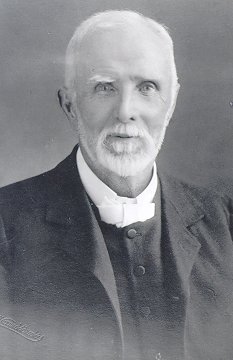
Birth Date: 31 Dec 1841 Farringdon, Hants
Death Date: 10 Jan 1927 Hastings
First Date: 1867
Last Date: 1875
Profession: Church Missionary Society missionary
Area: Mombasa
Married: 1. In Greenock, Renfrewshire 1 Aug 1867 Margaret McArthur b. 1837 Scotland, d. 14 July 1885 Cheshire; 2. In Eastbourne 16 July 1890 Laura Lavina Haynes b. 1861 Evesham, d. 1939 Hastings
Children: 1. Hugh McArthur (15 June 1868-20 Sep 1868 Rabai); Margaret Elwin (1871 Seychelles-1940); Henrietta Burt (1873 Scotland-1930); John McArthur; Matthew McLean S. (1879 Lyderstone-1952); William Romaine (1879-1959); 2 others 2. Thomas (1892-1951); Frederick Walter; Charles Henry (1896 Wimbledon); Laura Dorothy; Nelly (1897 Wimbledon); Roland Frank N. (9 Apr 1898 Wimbledon-1985); Ernest Harold (22 Mar 1899 Wimbledon-1983); Clara (1904 Wimbledon); Rosalie Grace (22.7.1907 Wimbledon-1991)
Author: A Nuka-English Dictionary, 1887
Book Reference: CMS
General Information:
CMS 1867 - Age 26. Of Winchelsea. b. at Farringdon, Hants. 1864 at CM College. 1867, June 16 Deacon by Bishop of London; 1871, April 1 Priest by Bishop of Mauritius. 1867, Sept 7 to East Africa; 1872, June 2 to England; 1873, Oct 6 to Mombasa, EA. 1875, Sept 24 to England and 1876, April 25 connexion closed. Abs. 6 years 9 months. Service 8 years 6 months. 1876 Curate-in-charge of Swafield ……. Married 1867, Aug 1 Margaret McArthur who died July 14 1885; (2) July 16, 1890 Laura Lavina Haynes. [Note by Roy Dunstan] He died Hastings Jan 10 1927
Gazette - 7/6/1927 - Graveyard at Rabai has grave of his baby Hugh
Wikipedia: Sparshott began his working life as a cooper in his father's hardware business, and was still working there in 1861, possibly to pay for his theological training. Sparshott was a missionary of the
Church Mission Society (CMS), serving for eight years and six months. He may have gained his nickname, "Rev Tom", during this period. His first placement, between 7 September 1867 and 2 June 1872, was in Kisuldini in the
Seychelles (then part of
Mauritius) and elsewhere in
East Africa, including
Zanzibar. He then returned to England. Between 6 October 1873 and 24 September 1875 he served in
Mombasa, Kenya, then returned again to England. His connexion with the CMS was closed on 25 April 1876.
Sparshott was organising secretary of the
Church Association for eighteen years, from 1881 to c. 1899. This involved lecturing and preaching "all over England". He was its deputation secretary from 1893.
Sparshott was curate of
St Nicholas Church, Buckenham,
Norfolk, from 1872 to 1873. He was temporary junior curate of
Hexham Abbey Church in 1876. He was curate of St Nicholas Church,
Swafield, Norfolk, from 1876 to 1877, then of St Mary's Church,
Syderstone, Norfolk, from 1877 to 1879. From 1879 to 1889, he was
domestic chaplain to
George Cholmondeley, 4th Marquess of Cholmondeley, at
Cholmondeley Castle,
Cheshire, for which he received a
benefice. He "resigned his appointment in order to accept a more active sphere of work at
Salisbury". Between 1890 and 1891, he was temporary curate of St Mary's Church,
Luddenden, Halifax, covering the illness of its vicar, Rev. James Moore. In Halifax he was "recalled locally ... for his powerful evangelical preaching". Between 1892 and 1894, he was chaplain of Princess Mary's Village Homes, in
Addlestone, Surrey. This was a home for daughters of women prisoners. Between 1911 and 1920, he was vicar of St Andrew's Church,
Weybread, Suffolk.
Judy Aldrick, History of the Kenya Coast, Nov 2025/ Issue 25 https://historyofeastafrica.com William Salter Price detested Sparshott and wanted him out of Kenya and the CMS. He accused him of being unsupportive, extravagant with Mission funds and holding evangelical beliefs. Hapless Sparshott annoyed Price badly. He had been attached to Rabai since 1873, but was ineffectual and had somehow become stranded in Mombasa in 1874 when civil unrest broke out. He, his wife and young child escaped the fighting by hiding out in a hut but his child died. Salter Price showed little sympathy and scornfully wrote in early February1875 that Sparshott was working like a slave helping to repair the mission house (Leven House). But he was not kind to the Bombay Africans and only liked Matthew Wellington who he had employed as his cook. Sparshott and his wife did indeed leave Kenya soon after and he was not subsequently employed by the CMS. Later he joined the Church Association, an evangelical body, and worked as a curate and vicar in churches in England, where he was known as a powerful evangelical preacher.
Back to search results