
View entry
Name: McDONOGH, John Edward
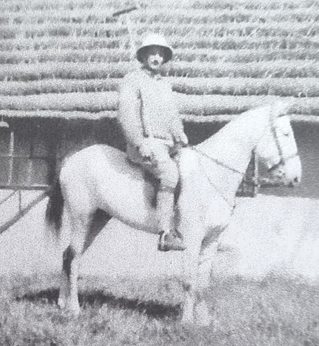
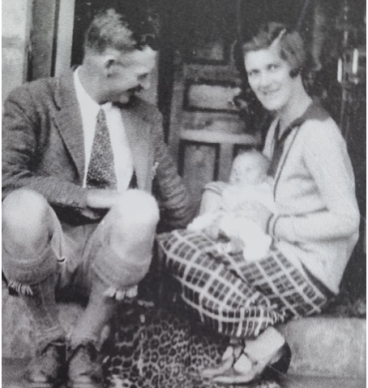
Photo Source: Joan Booth, Among Whistling Thorns, 2017
Birth Date: 1884 ?1880 Dublin
Death Date: 5 Mar 1962 Epsom
First Date: 1914
Profession: Stock inspector, farmer, stationed at Rumuruti as a veterinary officer
Area: Nanyuki, Isiolo
Married: In Westminster 10 Dec 1925 Mary Cicely Booth b. 14 Jan 1895 St Anne's on Sea, Lancs., d. 1 Oct 1974 Lawn, Cambridge (sister of Frederick Phillips Booth)
Children: Patricia Mary (27 June 1927 Nairobi); Mathew John (30 May 1934 Windermere); Susan Katherine (twin, 30 May 1934 Windermere)
Book Reference: Golf, Red 31, Hut, EAMR, Racing, Nicholls, Lytton
War Service: EAMR has J.E. McDonogh - Sergt. EAMS (attchd.)
General Information:
Racing - Owner of 'Mandarin' - 1930 - Capt. J.E. McDonogh
Nicholls - Isiolo - stock inspector J.E. McDonough. McDonough was quite a character. After a spell as a medical student he went through the South-West African campaign and finished the First World War in East Africa as a medical officer, though not medically qualified, with the rank of captain, RAMC.
Gazette 5/4/2938 - Honorary Game Warden
Gazette - 5/8/1925 - Voters Register - Kenya Province - John Edward McDonogh, Stock Inspector PO Nanyuki
Lytton - Stock Inspector at Isiolo in 1923 - Too long without leave
Gazette 6 Dec 1938 Aberdare Voters List has McDonogh
First played in the EA Amateur Golf Championship in 1938
He kept a collection of Somali and Abyssinian ponies and supervised the importation of ponies, cattle, sheep and goats from the NFD to the highlands of Kenya.
Joan Booth, Among Whistling Thorns, 2017 He had served in West and East Africa, being one of two men to hold commissions in the Royal Army Medical Corps without being doctors. He had been a medical student in Dublin and rather than be a doctor in Ireland had thrown in his hand and went abroad. Anyone in South Africa who knew the least bit about medicine was roped in to look after the troops, and a very good doctor he was, having a quick eye for diagnosis, understanding the African physique, and being adaptable to shortages. At one time during World War One he had a battalion, a small hospital and a labour camp in his care and was delirious with malaria most evenings. Hammis bin Baraka, his Swahili valet, would collect him, sponge him down, and get him onto parade next day. He left South Tanganyika on a stretcher in a dying condition but after a time in Kenya was sent as a medical officer to Jubaland.