Back to search results
Name: JACK, Frederick Chater DSO, MC (Lt.-Colonel)
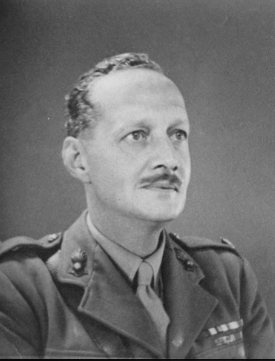
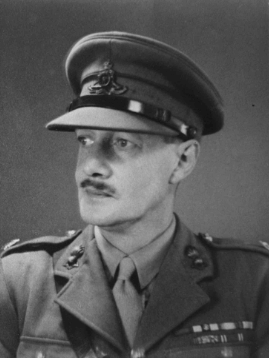
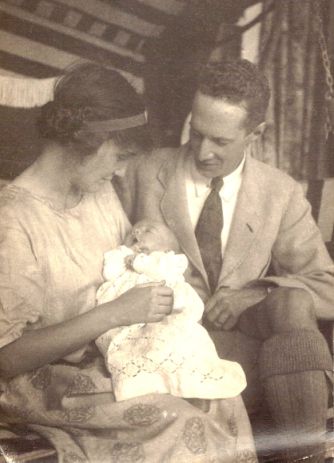
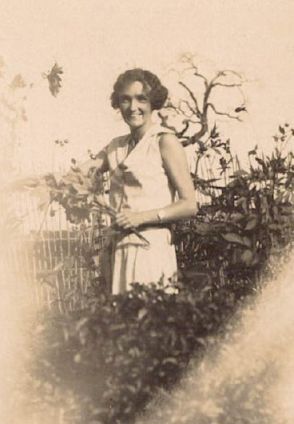
Photo Source: Hilary Munro; Ancestry.com
Birth Date: 17 Apr 1895 Newington, Midlothian, Scotland
Death Date: 8 Jan 1961 Ewshot, Hants.
First Date: 1920
Profession: ADC, then businessman and farm owner. His wife was a horticulturist at Kama Koia (KK) farm, near Kitale; Mt Elgon Farm
Area: 1920 Kitale, 1922 Kapsabet, 1925 Machakos, 1930 Box 49, Kama Koia farm Kitale
Married: At Parklands, Nairobi 1 Mar 1924 Emilie May Sutton b. 18 Aug 1900 Reading, d. 20 Apr 1986 Reading (dau of Leonard Goodhart Sutton, Sutton's seeds)
Children: Monica May (Beghin) (25 Nov 1924 Nairobi-26 Mar 1971 Bryanston, Transvaal, South Africa); Valerie Ann (Waite) (4 Jan 1926 Machakos-18 July 2007 Bognor Regis); Penelope Noel (Gabb) (twin, 4 Jan 1926 Machakos-7 Feb 2013 Southampton); Henrietta Susannah (Brock) (18 Oct 1935 Kitale)
Book Reference: Debrett, KAD, Red 25, Red 31, Hut, Thurston, Red 22, Trans Nzoia Scrap Book, DSO, Gazette, Macmillan, Hilary Munro (granddaughter)
War Service: WW1 RFA Palestine (despatches, MC, DSO); WW2 as Lt.-Col. R.F.A. 1st Infantry North Africa, Italy
General Information:
Gazette 28 Nov 1961 - probate
Gazette 6 Dec 1938 Trans Nzoia Voters List
Thurston - Royal Botanic Gardens, Registry Files - /1/KEN/18 - 1932-39 - Major and Mrs Chater Jack (proprietors of Mt. Elgon Nurseries): specimens and water colour drawings by May Chater Jack.
Trans Nzoia Scrap Book - Horticultural Society - The Trans Nzoia Branch of the Royal Kenya Horticultural Society was founded in 1929, and the first show was staged in Kitale that same year. The moving spirits of this enterprise were Mrs Will Hoey and Mrs Chater Jack. May Jack, the only daughter of Leonard Sutton, came as it were from good gardening stock, and she and her husband very quickly became experts in discovering what could be grown in the district.
DSO - London Gazette 16/9/18 - For conspicuous gallantry and devotion to duty. After withdrawing his battery across a canal under close-range fire, this officer brought his last gun into action in full view of the enemy, who had rushed the bridge, and occupied a house, by his accurate fire compelling them to evacuate it, and recross the bridge, where they were kept in check for an hour.
Gazette 9/6/1920 - Arrived on 1st Appointment - Asst. District Commissioner - 28/5/1920
Macmillan 1930 - The Kitale Stores Ltd. - General Merchants - The business was established in 1919 under the title of Hoey's Bridge Stores. In 1919 it was amalgamated with the Kitale Supply and Auctioneering Co. Ltd. And its present title was then assumed. It was started in small premises in Bahati Township. ……… The managing director is Major F.C. Jack, DSO, MC and the manager is Mr P.A. Wilkinson.
Debrett - Formerly in Provincial Administration Dept., Kenya Colony.
KAD 1922 - Administration Cadet, Kapsabet
Gazette 31 Oct 1961 probate
1939 England and Wales Register living with wife in Reading
Hilary Munro (granddaughter), 'The Seedsman's Daughter': This traces the life of May Sutton of Sutton seeds and her husband Lt Colonel Frederick Chater Jack as pioneer settlers in Kenya between the two world wars. They had a very creative a successful horticultural nursery and unsuccessful farm while tackling disease, hail, locusts and the global economic crash, before sailing back in 1939 into the gathering storm of war.
Sept 1931 The killing of their nanny Mrs Gertrude Kuhn by Fred - thought she was a leopard.
Chronology: When he arrived Kitale as ADC in 1920 it was just a place on the map and there was only one other ADC there. Fred organised the road crews and had the avenue of Juniperous Procera, an indigenous tree with a liking for Kitale's red loamy soil, planted at Kitale’s elevation at 1890 metres. He had a lifelong love of trees. Their honeymoon was in Nakuru and their married life started at Machakos, with Fred in the Colonial Admin. Service as Senior Administrative Assistant. Leonard Sutton of Sutton seeds sent vegetable seeds of plants that were unobtainable in Machakos. By 1925 the vegetable patch produced enough for their needs. Fred engaged in land deals in Kitale making a profit of £1500 but the Kenya authorities disapproved of their employees indulging in land speculation so Fred hid his deals through a property development company called Kitale Estates Limited which he had set up in 1920. He was the majority shareholder and Elbert Steyn and Eric Pharazyn, farmers and land dealers in Kitale for many years, were minority shareholders.
Fred left government employment and obtained Elgon Farm in 1925. Mt. Elgon Farm was land bought from a man called Hewitt who had won the land from the Soldier Settlement Land lottery. It lay along the border of the native reserve after the Sunde land, Farm 6498 which also bordered the reserve.
Needing an income, Fred took a job as Chairman of Megson & Pharazyn (chartered accountants, estate agents, valuers, insurance and car agents), the biggest company in Kitale, at a salary of £400 a year. This would cover his family’s needs and the wages of Jim Jameson, the new farm manager, but it meant that he stayed in Kitale for two or three days every week with the car. He finalised the merger of Megson & Pharazyn with Davis Ltd. He was also director of Davis Ltd which was the second biggest company with a garage, implements, auctioneers, agents, shoe shop and dressmaking business.
May was therefore marooned at the farm with the children for much of the week. The family was supported by Leonard Sutton, May's father, who also sent seeds (Sutton's Seeds) and bulbs.
In England Leonard Sutton employed Mrs Kuhn as a nanny for the Chater Jacks. She had been employed by the Bartholomews 'who were a very nice young couple. He said: 'they confirmed all my good impressions about Kuhn. She has been with them about two years and the only reason for parting with her was that they wanted more of a nursery governess as the youngest was now eight. She came to them when they were in difficulties and Mrs. Boucher sent her down in reply to a telegram for the best nurse she could find, and she has been with them ever since … I mentioned you kept chickens and Mrs. Bartholomew said that Mrs. Kuhn took a great interest in both the children and the chickens and kept accounts of the eggs and fed them under her (Mrs. Bartholomew’s) direction. The only drawback is that she wants £100 a year. If that annoys you very much, I must tell my bank to pay the extra £20 onto your £600 once a year!' ...‘Engaged Mrs. Kuhn, sailing by the German boat on December 2nd’, he cabled May on 2nd November and followed up with a letter by airmail. 'Mrs. Bartholomew told me that Mrs. K’s husband was not a German though he had a German name, and he died before the war. Mrs. Kuhn had worked in Shanghai and Romania as a nanny. Her father was a doctor.'
The nanny arrived in 1929. Supervision of the children now passed to Mrs. Kuhn’s full-time care as was usual for that time. She slept in the night nursery with the children and supervised all their meals in the day nursery, except for Sunday lunch when Monica May lunched with her parents on her own. She was very proud of this special treatment. After lunch, she fetched her sisters to the drawing room ‘where they disport themselves till we are tired of laughing’. This marked preference for Monica by her mother continued through her childhood and was the reason why neither Penny (she changed her name from Pamela by deed poll) nor Valerie (who changed her name from Ann) liked their elder sister in later life.
May also started to develop her dream of a commercial horticultural venture using her gardens as her showcase. She established Mount Elgon Nurseries. People came to see familiar flowers from Britain growing in Kenya - gladioli and tigridias with enormous flowers, dahlias grown from last year’s seeds and now corms and delphiniums, a perennial in the Kenyan Highlands and ‘a wonderful blue’. May was ever keen to assert her Sutton Seeds family connection and the visitors were assured that everything was grown from Sutton Seeds bulbs and seeds and were given the Sutton Seeds catalogue to browse through. Being a Sutton defined May and informed her status in society, and she knew it was key to her venture’s success. Maintaining the good reputation of Sutton Seeds in Kenya was important to the success of the venture. May was conscious of the strong competition from Carters, Dobbies and Ryders seed companies, and felt any shortfall by Sutton Seeds personally. When some Sutton seed packets of pea disappointed customers, May resolved to trial the seeds at her farm and wrote to her father to alert him. ‘So many people lately have said what a pity it is that Sutton Seeds won’t grow out here. Unless people order their seeds direct from Suttons, some of the seed is stale, but with a lot of people we know it is their own fault. They plant varieties they know of in England regardless of the different climate here, so the agents only stock ordinary English varieties of things.'
Fred’s first love was trees. Apart from coffee plantations, he set out a fruit orchard when he was building the house in 1926. He sourced his trees from South Africa and planted an orange grove, a wineberry hedge, a quince as well as a few apples and an almond espaliered on a wall.
May also commercialised her egg business and bought another incubator. Seven ducks were added to the 30-odd chickens and the geese that would in time so annoy Mrs. Kuhn. The geese eggs were a happy accident ‘most unexpected as they were surplus Christmas stock bought from the butcher’.
Fred was now on the Trans Nzoia Road Board, chairman of the Kitale Stores whose improved profits allowed payment of a 15% dividend as against 8% the previous year; and chairman of the amalgamated Davis Limited and Megson & Pharazyn. During his year as chairman of
M&P, his newly formed finance committee and the amalgamation had brought cost savings and this had not gone unnoticed. His solicitor Angus Lavington had put £4000 into M&P in October 1927 before going on holiday. M&P continued to expand. On January 1st the shop had expanded to include the only English butchery in Kitale to sell grade beef as against trek oxen, sausages and salt meat. At the beginning of March, Angus Lavington brought back Megson’s young cousin and qualified printer to start a new line as stationers at M&P. In February, the Kitale Garage asked M&P to take them over. M&P were not interested in the garage business or agencies, as Davis Limited had the Shell garage and agencies business, but it did have an excellent location on the first corner of Kitale main street. For £2000 additional capital, M&P could put up a big office building and save £800 a year in rents.
The horticultural venture also grew apace that April. Some forty seed boxes were transplanted from the plant nursery and the Sutton Seeds delivery of daffodil, crocus and snowdrop bulbs survived shipment well. May planned to sell these to the Christmas market. May wrote articles for journals and contributed to the Kenya Horticultural Society Gardening in East Africa, a Practical Handbook, published in 1934 by Longmans, Green and Co. Ltd with a foreword by A.J. Jex-Blake, the editor. The 1st edition sold out in two years. Her chapter on the Propagation of Plants was retained in subsequent editions.
May's father Leonard Sutton came to visit. Fred bought farm 1820/1. He also bought most of Malindi Bay on the coast. Fred split the coast land into three parts. A few acres ‘in the best position’ for his family, registered in May’s name and bought with her money, and two partnerships to spread the risk and the cost. One partner was Morrison, a solicitor in Mombasa, for the north part of the bay where there was a break in the reef and surf bathing was possible at all stages of the tide. It was divided into 2 ½ acre plots, those right on the bay being called ‘A Plots’ and those behind called ‘C Plots’. The other partnership of 99 acres was with Jim Jameson, their farm manager, on a 50:50 basis ('we are glad to do him a good turn'). This land lay on the south side of Malindi Bay where there was no break in the reef and it was therefore more suitable for families with children. It was divided into 4 ½ acres called ‘B Plots’.
Miss Reed was hired as nanny/governess 1931-39. The Chater Jacks had 2 farm managers - Jim Jameson and Campbell. Jameson was farm manager at Kama Koia Farms, and Campbell manager at Kitale Estates Farm owned by Kitale Estates Ltd. For the latter Chater Jack was major shareholder, with Elbert Steyn and Eric Pharazyn as junior shareholders.
Fred filed for bankruptcy in Dec 1938. Kama Koia Farm had never made a profit, The family left Kenya in Jan 1939, partly because Fred saw war looming. In 1939 he rejoined the 51st Highland Regiment Heavy Brigade. By the end of the war he was a Lt.-Col. He was in Italy then and part of the occupation force until 1946, and then spent a year in a military hospital. At some point the Kama Koia house burnt down and its land and farm were sold. By the 1950s the farm was operating as a dairy run by the Davis family and another house was built. By 1964 that house had also burnt down and there were only foundations left.
Back to search results